HHENDERSON
WATER FILTRATION
Free Assessment
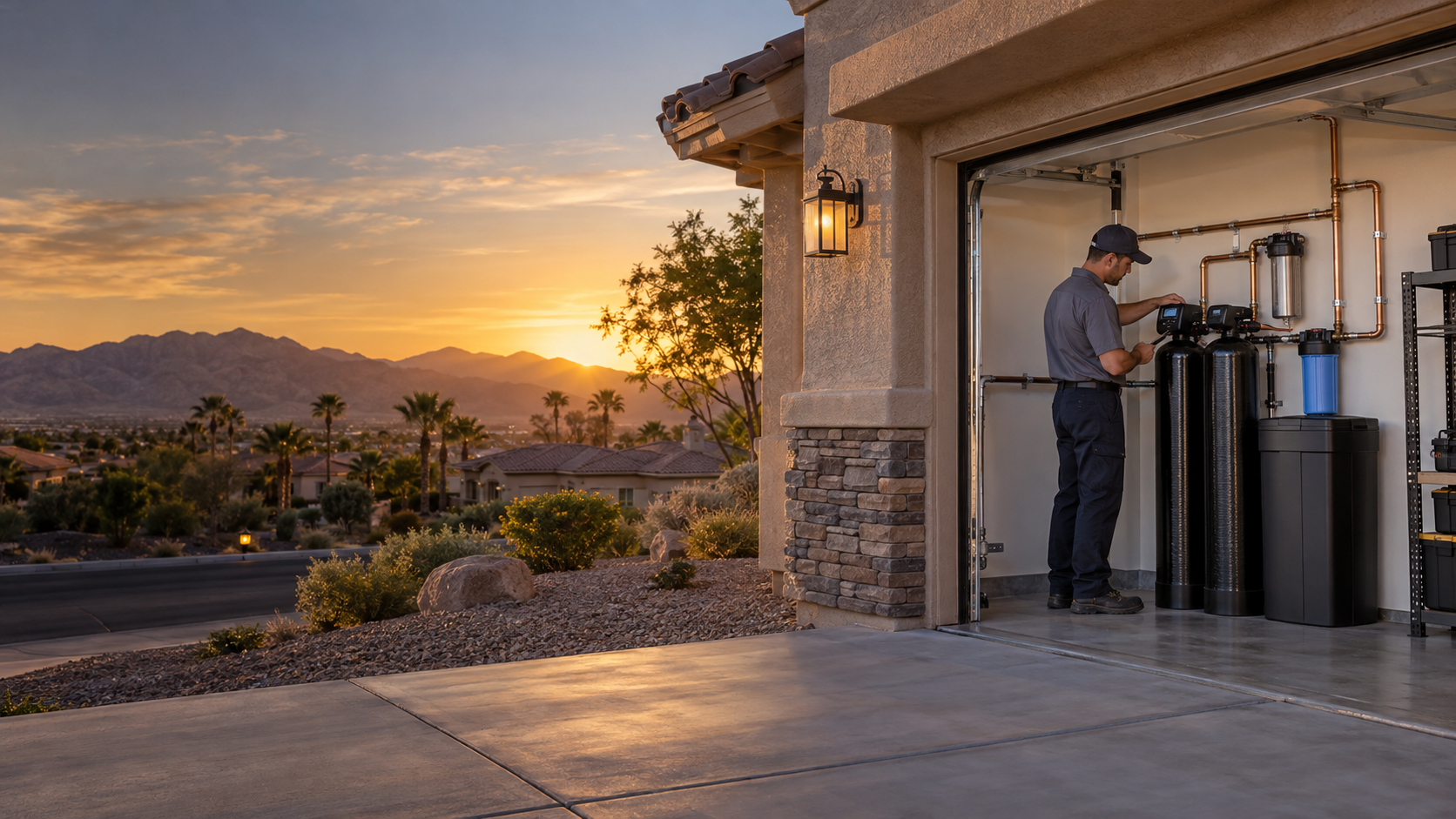
Water treatment technician inspecting a whole-house filtration system in a Henderson home

HENDERSON WATER, EXPLAINED

Very hard water.
Clearer choices.

Compare softeners, whole-house filtration and reverse osmosis using Henderson’s real water context—not a one-size-fits-all pitch.

✓ Address-specific guidance✓ No-obligation options✓ Local water context
LOCAL HARDNESS280 mg/L16 grains per gallon · very hard
PRIMARY SUPPLYColorado RiverMineral-rich water delivered through Lake Mead
2025 CITY REPORTStandards metEPA and Nevada allowable limits

THE SHORT ANSWER

What treatment makes sense in Henderson?

If scale and spotting are the problem, a correctly sized ion-exchange softener is the direct treatment. If taste or odor is the concern, activated carbon may be appropriate. For drinking and cooking water, an under-sink reverse-osmosis system can reduce many dissolved substances. These processes do different jobs.

Southern Nevada Water Authority reports water hardness of 280 parts per million, or 16 grains per gallon. It also notes that municipal water is treated to meet state and federal standards. A responsible recommendation begins with the desired outcome, household flow, available plumbing and maintenance you are willing to own.

HOW THE SYSTEM FITS TOGETHER

From the street to the glass.

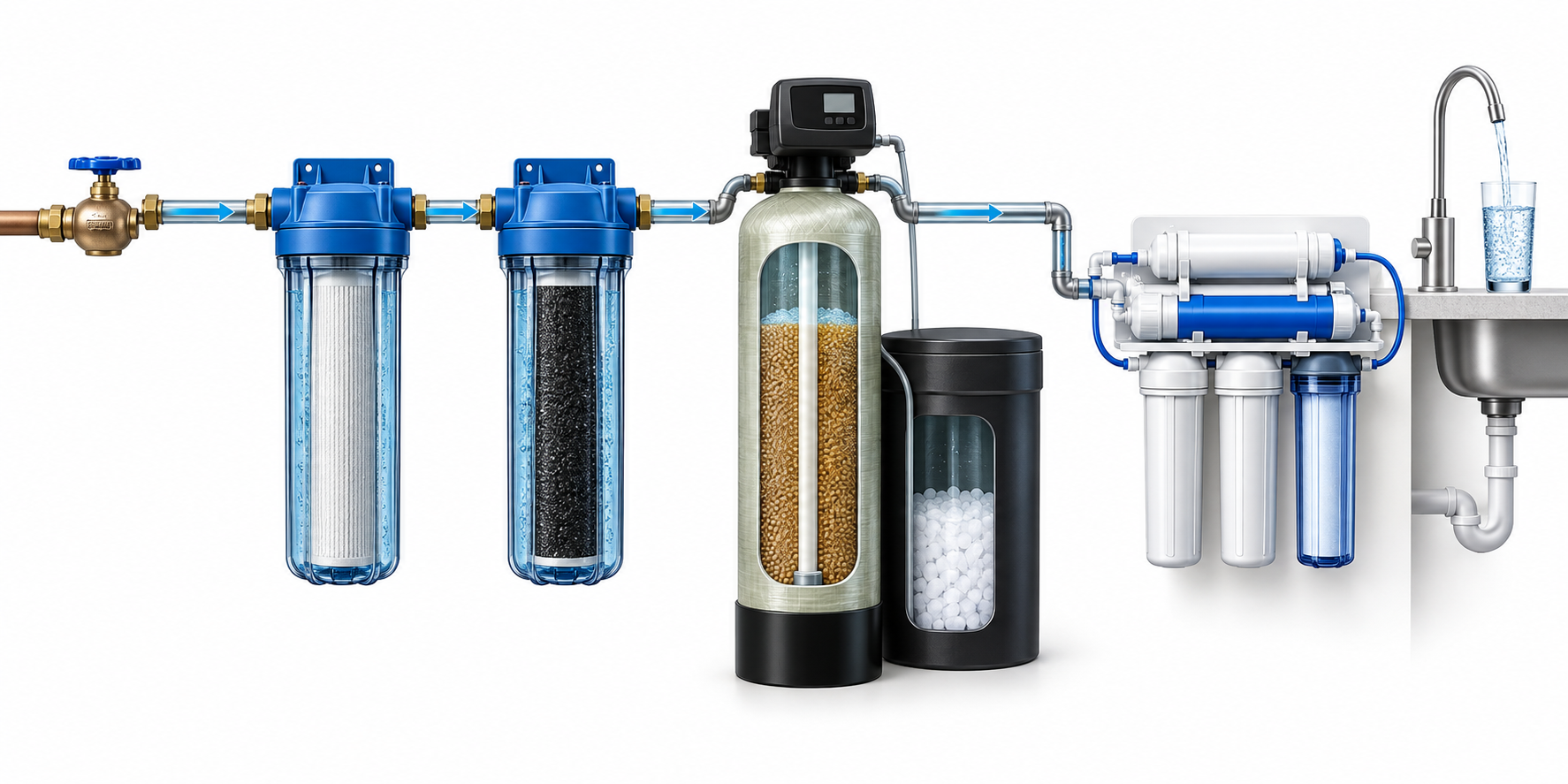
Not every home needs every stage. This diagram shows the common roles so you can compare proposals without confusing filtration, softening and reverse osmosis.

Water treatment flow showing sediment filtration, activated carbon, softening and under-sink reverse osmosis
  1. 1. SedimentProtects downstream equipment from particulate.
  2. 2. CarbonTargets disinfectant taste, odor and selected organics.
  3. 3. SofteningExchanges calcium and magnesium that cause scale.
  4. 4. Reverse osmosisPolishes water at a dedicated drinking tap.

POPULAR SOLUTIONS

Match the equipment to the job.

HENDERSON WATER TREATMENT GUIDE

Start with the problem you want to solve.

Henderson homeowners often use “water filter” as a catch-all phrase, but softeners, carbon filters and reverse-osmosis systems are not interchangeable. Choosing the right process starts with separating hardness problems from taste, odor and drinking-water goals.

Hard water and mineral scale

Southern Nevada Water Authority reports local hardness at approximately 280 milligrams per liter, or 16 grains per gallon. That falls in the very-hard category. Calcium and magnesium are the primary hardness minerals. They are not usually treated as a health problem, but they can leave white spots on fixtures and glass, create crust around faucets, reduce soap lather and contribute to scale inside water-using appliances.

An ion-exchange water softener is the direct treatment when the goal is removing hardness minerals. The system exchanges calcium and magnesium for sodium or potassium ions and periodically regenerates using a brine solution. Proper sizing depends on measured hardness, daily water consumption, household occupancy and desired time between regenerations. Oversized equipment is not automatically better; the control settings and usable capacity matter.

Read the Henderson hardness guide →

Taste, odor and whole-home filtration

Activated carbon is commonly used when a homeowner wants to improve disinfectant taste or odor. Carbon does not soften water, and a softener does not perform the same job as carbon. A combined installation may make sense when a household has both hardness and aesthetic goals, but each stage should have a clear purpose.

For whole-home carbon filtration, ask about the media type, actual media quantity, service flow and expected replacement interval. Adequate contact time is essential. A tall tank or an attractive equipment package does not prove performance. The written proposal should identify the contaminant or aesthetic issue being addressed and any third-party certification supporting the claim.

Compare taste and odor options →

DRINKING WATER

Where reverse osmosis fits.

Reverse osmosis is generally installed at one point of use, most often beneath the kitchen sink. Water passes through prefilters and a semipermeable membrane before reaching a storage tank or tankless delivery system. RO can reduce many dissolved substances, including the minerals that contribute to hardness, at the dedicated faucet.

That does not make an under-sink RO unit a replacement for whole-home softening. The dishwasher, shower, washing machine and water heater still receive untreated hard water unless the home also has treatment at the service entry. Some Henderson households choose a softener for the home and RO for drinking and cooking. Others only want one of those systems.

Compare membrane certification, production rate, storage capacity, operating pressure, reject-water ratio, filter cost and refrigerator routing. Maintenance is part of the purchase: neglected filters or an unsanitized storage tank can undermine the result.

Explore reverse-osmosis systems →

A practical treatment map

White scale and spots
Test hardness and evaluate ion-exchange softening.
Disinfectant taste or odor
Compare certified carbon filtration sized for flow.
Drinking and cooking water
Compare under-sink carbon and reverse osmosis.
Unknown safety concern
Use the correct sampling protocol and a certified laboratory.

BEFORE YOU BUY

What a useful Henderson proposal should include.

1. A defined goal

The proposal should state what the system is expected to improve. “Better water” is not specific enough. Look for measurable hardness reduction, a defined taste or odor objective, or a certified reduction claim for a named substance.

2. Sizing assumptions

Ask which peak flow, household occupancy, plumbing diameter and tested hardness were used. Equipment must deliver treated water when several fixtures operate without creating an unacceptable pressure drop.

3. Complete equipment details

Get the control valve, tank size, resin or carbon quantity, prefilters, bypass, drain requirements and RO membrane model in writing. “Premium system” is a marketing label, not a specification.

4. Lifecycle cost

Compare salt, replacement filters, membranes, service visits, water used for regeneration or membrane production, and expected media replacement. A low installation price can hide higher ongoing costs.

5. Installation scope

The quote should explain where the equipment will sit, what plumbing changes are included, whether electrical or drain work is needed, and how outdoor or garage heat exposure will be handled.

6. Verification and warranty

Ask how operation will be verified after startup, what labor and parts are covered, and which maintenance actions are required to preserve the warranty.

Use the complete installer-question checklist →

PLANNING YOUR BUDGET

Realistic installed-price factors.

Henderson pricing varies with equipment capacity, plumbing access, valve quality, media quantity, warranty and site conditions. Basic under-sink reverse osmosis often costs less than whole-home treatment. A properly sized softener requires more equipment and installation work, while a multi-stage whole-home filter and softener can require separate tanks and more plumbing.

Use published ranges as planning numbers, not promises. The final written price should identify everything included and excluded. Complex reroutes, drywall or stucco access, electrical work, unusual drain routing and large homes with higher peak flow may increase the cost.

Under-sink RO$650–$1,500
Water softener$1,800–$3,800
Filter + softener$3,200–$6,500+
See the complete cost guide →

QUICK ANSWERS

Common Henderson water questions.

Is Henderson tap water safe?

The City of Henderson states that its 2025 Water Quality Report confirmed compliance with applicable EPA and Nevada Division of Environmental Protection standards. A home-treatment decision can still be appropriate for hardness, taste or a personal drinking-water preference, but the municipal supply should not be portrayed as unsafe without valid evidence.

Does every Henderson home need a water softener?

No. The local water is very hard, so many homeowners prefer softening for scale, spotting and cleaning concerns. It remains a household decision. Consider the symptoms, measured hardness, maintenance, sodium or potassium addition and total cost before purchasing.

Will a whole-house filter remove hardness?

A standard sediment or carbon filter does not remove the dissolved calcium and magnesium responsible for hardness. Ion exchange is the conventional whole-home softening method. “Salt-free” products are generally conditioners and should not be described as true softeners unless they remove hardness minerals.

Should I test my water first?

Testing should match the decision. A calibrated hardness test helps size a softener. If you are concerned about lead, PFAS, arsenic or another specific substance, use the correct sampling method and a qualified laboratory. A visual sales demonstration is not a safety test.

How large should my system be?

Size around measured conditions and service flow—not only the number of bedrooms. Bathrooms, occupancy, large tubs, body sprays, simultaneous showers, pipe diameter and appliance use can change peak demand. Media contact time and pressure drop also matter for filtration.

How often does treatment equipment need service?

It depends on the system and water use. Softeners require salt checks and periodic inspection. Cartridge filters may need replacement several times per year. RO systems need scheduled prefilters, postfilters and eventual membrane service. Whole-home media has a longer but finite service life.

Read all Henderson water-treatment FAQs →

BUILT FOR HENDERSON HOMES

One city. Different homes and plumbing.

Green Valley, Anthem, Inspirada, Seven Hills, MacDonald Ranch, Cadence and older central Henderson homes differ in plumbing routes, garage heat exposure, household demand and installation space. Good sizing accounts for peak flow, drain access, pipe diameter and serviceability.

See service-area details →
“The best system is the one that solves a measured problem, maintains pressure and has a maintenance plan you will actually follow.”

NO-OBLIGATION WATER REVIEW

Start with your home, not a sales package.

Tell us what you notice. A water-treatment provider serving Henderson can follow up with options sized to your goals.